


Yoel Margolis is a student at Reichman University in Israel. He was previously a Deployment Strategist intern at Palantir.
When Israel’s Merkava (Chariot) tank was introduced in 1979, experts in Israel and abroad disparaged its radically unconventional design, which broke many commonly held assumptions in the industry. The tank’s chief designer—Major General Israel Tal—was written off as delusional.
Four decades and eight wars later, the Merkava, now in its fourth generation, is regarded as one of the best armored combat vehicles in the world. Israel Tal’s image can be found on the “Wall of Greatest Armor Commanders” at the Patton Museum of Leadership, alongside figures such as Creighton Abrams, Erwin Rommel, and Old Blood and Guts himself.
It is said that necessity is the mother of invention—and the Merkava is no exception.
In the mid 1960s, Israel was in desperate need of modern tanks. The British, recognizing an opportunity for collaboration, agreed to sell the Chieftain, their newest tank, to the IDF. In return, Israel became a secret development partner—providing invaluable knowledge from its recent combat experiences. Israel even helped to sell the Chieftain to Iran—then a discreet ally of Israel on matters of defense.
It seemed like a perfect deal. There was only one problem: the British were bluffing.
Succumbing to pressure from Arab states, the British finally came clean in 1969, after years of relying on Israeli expertise. They had no intention of selling the Chieftain to Israel. Instead, they announced several deals with Arab nations including Jordan—at that time a sworn enemy of the State of Israel.
Facing grim intelligence reports of modern Soviet T62s pouring into the surrounding Arab armies, Israel scrambled for a second option. The United States, reluctant to sell their newest tank, the M60, to Israel, agreed to arrange the sale of refurbished M48 Pattons from the West German army, following an overhaul process conducted by the Italian defense company OTO Melara. This deal also collapsed, partially due to noncooperation from communist Italian union workers influenced by Soviet anti-Israel propaganda.
Driven by his frustration over the Chieftain and Patton debacles, Major General Israel Tal, the head of IDF armored corps, came to a radical conclusion: the time had come for Israel to develop its own domestic tank program.
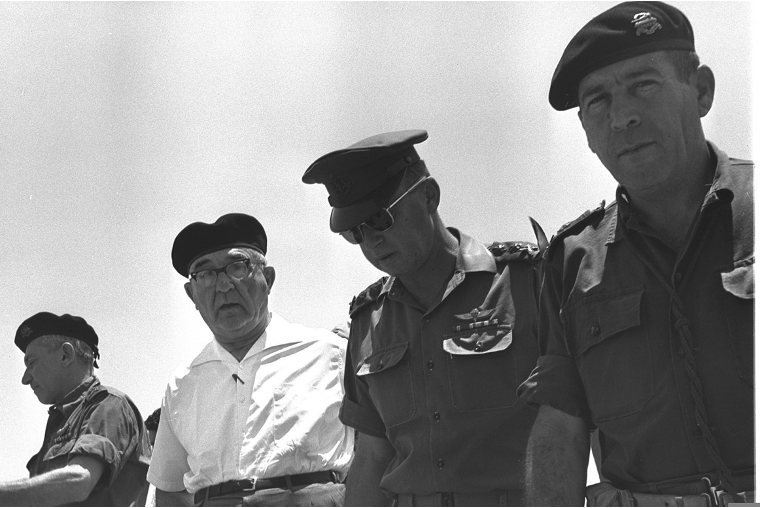
No stranger to controversy, Tal had earned a reputation during his years of service as blunt and uncompromising—promoting his unique perspectives on armored warfare and its central importance in broader strategic planning. His unconventional views created tension with many powerful members of IDF senior leadership. Tal resigned twice from the military—first in 1969 following a dispute with Chief of Staff Haim Bar Lev over a strategic decision in the Sinai desert. Wooed back three years later, he served as Deputy Chief of Staff and Commander of the Southern Command during the Yom Kippur war until he resigned again in 1974—this time because of an argument with Defense Minister Moshe Dayan.
Despite his resignations, Tal did not disappear from the defense establishment. In 1970, following his first resignation, he founded MANTAK (an abbreviation of Merkava and Armored Vehicles Directorate) as a subunit within the Israeli Ministry of Defense. MANTAK’s one mission was to develop an indigenous tank program that would relieve Israel’s armored corps from any dependence on potentially unreliable foreign states.
Surprisingly, given his discordant relationship with many in the defense establishment, Tal was essentially given free rein. Reporting directly to Dayan, he structured MANTAK with a model of extreme centralization. He employed just 150 engineers and took part in almost every decision—ensuring that his unique design philosophy was implemented across every step of production.
After many years as an armored field commander himself, Tal had developed a perspective on armored warfare tactics that differed from the mainstream. He viewed tanks as the ideal front-line force while most thought of them as support assets that depended on infantry protection. This shift in tactical thinking formed the basis of his guidelines for the Merkava.
Before Merkava, most tank programs promoted a balanced compromise between speed, firepower, and protection of the crew. Tal, drawing on his experience leading tank troops, insisted on a design philosophy that prioritized the protective qualities of the tank above all else. If the tank was to lead the charge in battle, without infantry protection, then ensuring its resilience to enemy fire was crucial. Furthermore, he believed that tank crews with an added sense of protection would perform better, thereby making up for potential losses in mobility and firepower.
In the most notable departure from standard designs, the engine was placed in front of the crew, rather than behind it. A crew hatch was placed in the rear, allowing crews to evacuate an immobilized tank while being protected from enemy fire by the front facing, heavily fortified, engine compartment. Choices such as these added significant weight to the Merkava, severely reducing its horsepower to weight ratio compared to other comparable tanks. It was a tradeoff Tal thought would pay off.
His perspective emerged from personal study of battlefield reports from Israel and around the world. As military strategists Edward Luttwak and Eitan Shamir note, “[The Merkava] is also the only tank designed by tank soldiers based on their own experiences, including the synthesized experience of Tal’s exhaustive ballistics research…” For instance, one report examined 500 damaged tanks and determined that while penetration of the engine compartment only immobilized the tank 2% of the time, a breach of the crew compartment disabled the tank 100% of the time. This report, among others, reinforced Tal’s decision to provide enhanced protection to the crew.
Israel of the 1970s was still very much a product of its socialist founding and its private defense industry was far from the powerhouse it is today. The Merkava’s design and production processes were run from within the Ministry of Defense itself with Israel’s large defense primes (including IMI, Rafael, and others) limited to manufacturing specific components. To anyone familiar with the typical failures of government-run production projects, this arrangement might seem destined for disaster.
Yet Tal succeeded, likely because he reported directly to the defense minister, essentially removing the lengthy chains of command and bureaucratic red tape that typically stifle efficiency and innovation. The freedom he enjoyed, combined with the relatively small size of his team, enabled him to maintain a rapid development timeline—components were designed in weeks (and sometimes hours), immediately tested and refined, then moved to full-scale production.1
This model of rapid feedback loops and compressed timelines proved remarkably effective. Tal delivered combat-ready tanks in 1979—a timeframe similar to tank programs of countries with significantly more developed industrial bases.
The Merkava drew intense criticism upon its introduction. Skeptics both in Israel and abroad questioned Tal’s design decisions—above all, the front-facing engine compartment, which conventional wisdom deemed a fatal compromise.
Unlike many other heretics featured in this series, Tal’s vindication did not take long to arrive. In 1982, the State of Israel invaded southern Lebanon in Operation Peace for the Galilee. The campaign, remembered today as the First Lebanon War, was the Merkava’s combat debut. It silenced the critics almost immediately.
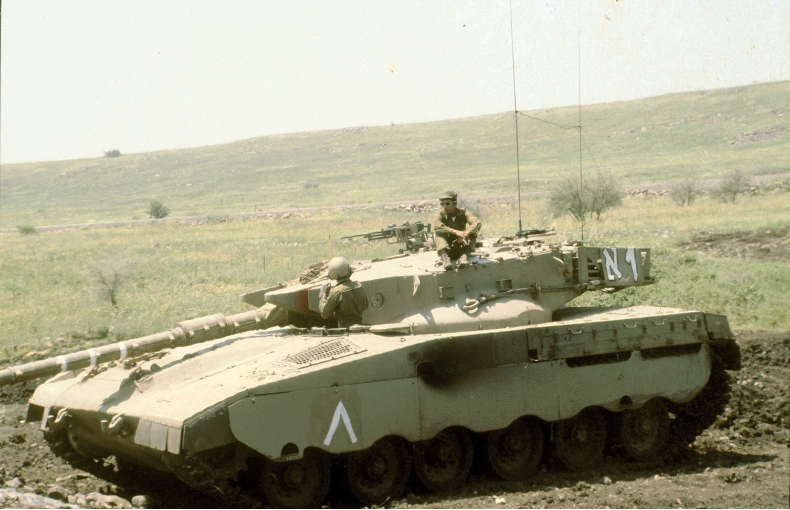
The Merkava spearheaded Israel’s ground invasion and Tal’s controversial design choices proved their merit under fire. Crew survival rates far exceeded those of previous tanks, even when hit. Demand for the Merkava from armored commanders soared as they recognized the added safety and success rates of Merkava crews.
Throughout the war and its immediate aftermath, Tal and his team at MANTAK gathered field reports and combat data, documenting every aspect of the tank’s performance. When the Merkava Mark II rolled out in 1983, barely a year into the conflict, it incorporated dozens of refinements drawn directly from frontline experience. The rapid iteration that had defined the tank’s development continued through its evolution.
Over the next two decades, the Merkava became synonymous with the IDF, ultimately becoming its sole tank in 2004. Tal retired as special armor advisor to the minister of defense in 1989 but remained unofficially involved in developing all four Merkava variants until his death in 2010.
In the two years since the October 7th Hamas attacks, Tal’s philosophy has been vindicated once again. For decades beforehand, Israeli defense leaders, including multiple chiefs of the general staff and defense ministers, had backed strategic policies that marginalized the armored corps. Armored battalions were cut as resources shifted to the “sexier” elite special forces and cyber units. When hostilities erupted in Gaza and Lebanon, the armored corps returned to center stage, proving crucial to the IDF’s counterguerilla strategy in both invasions. Once again, Tal’s theory of armored warfare’s centrality proved correct in the face of skepticism.
Beyond the enduring relevance of tanks, the story of Israel Tal and the Merkava offers a number of lessons for modern military innovators in Israel and abroad. Western nations face a defense industrial challenge similar to Israel’s in the 1970s: how to rapidly rebuild and reshore the production of critical military capabilities. The Merkava program demonstrates how military bureaucracies can break from peacetime inertia and produce genuinely innovative technologies when national security demands it.
Not all features of the Merkava’s story should be replicated. Establishing a MANTAK-esque government-run production line for defense technology would be a recipe for disaster in most large Western countries. However, there is undoubtedly much to learn from how Tal leveraged this potential nightmare of bureaucratic inefficiency. Tal used his organization’s placement within the Ministry of Defense to gain frictionless access to frontline troops for constant testing and feedback. This rapid iteration cycle, combined with his own combat experience, ensured the Merkava’s design reflected actual battlefield needs—not the theoretical preferences of executives disconnected from war.
Most importantly, the Merkava succeeded because Israel’s defense establishment recognized brilliance even in its prickliest form. Tal deserves immense credit, but so do the IDF and Ministry of Defense leaders who backed him—and who had personally clashed with him in the past. They set egos aside, recognized his unique strengths, and empowered him despite the friction.
The question facing today’s defense bureaucracies is whether they can do the same: identify the righteous heretics in their ranks and empower them in spite of—or perhaps because of—their heresy.
Further Reading
The Art of Military Innovation: Lessons from the Israel Defense Forces by Edward N. Luttwak and Eitan Shamir
It is worth noting that Israel was significantly smaller than many Western democracies with similarly relevant defense establishments, and thus navigating its bureaucracy likely was (and is) much simpler than navigating those of other states.
