


Nathan Mintz is the co-founder and CEO of CX2, an electronic warfare start up. Nathan spent 14 years as an EW and Radar systems engineer at Raytheon and Boeing before becoming founding CEO of directed energy company Epirus and Spartan Radar (recently acquired by John Deere). He has 10 U.S. patents, mostly in RF and EW systems.
“You Need a Lot of Good Yogi Berra Quotes”
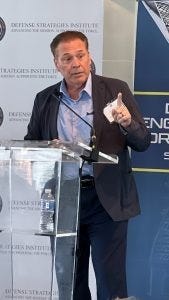
The late great Dr. Joe Guerci, former DARPA Special Program Office (SPO) director, friend, and prolific RF guru, once told me he wanted to write a book about “the Art of Straphanging.” For those who don’t know what a straphanger is: it’s a person on a team who is just “along for the ride”:
“It’s a hard job being a straphanger . . . you have to intentionally try to be unproductive . . . you have to love being in meetings and creating useless actions . . . You need a lot of Yogi Berra quotes locked and loaded.” —Dr Joe Guerci
Joe lost his battle with cancer this past year, but I thought I would title this article in his memory.
Joe’s hilarious tirade aside, the fact is that we have too many straphangers in the Defense (now War) Industrial Complex. People getting paid way too much to hang the strap and waste our money, or even worse: to squander it through fraud or abusing the rules to their financial advantage. It’s bankrupting us.
While we should be enthusiastically cracking down on green energy subsidy fraud in North Carolina, Medicaid fraud in Minnesota, and PPP loan fraud in California, we also cannot deny that the Department of War has tens or even hundreds of billions of dollars in waste, fraud, and abuse hidden within. The last report from the DoD Office of Inspector General (OIG) identified over $6.6 billion in criminal fraud and avoidable waste and abuse in a six month period alone.
In this post, I will dive into various schemes of waste, fraud, and abuse I have personally seen in my two decades plus in aerospace and defense that small businesses in particular are guilty of—and talk about what we are already doing or should be doing to rein this in. I could write a book about abuse of cost-plus contracting and earn value accounting, along with the straphanger nature of most SETAs and FFRDCs, so I’ll save those subjects for a later date (maybe my memoirs).
Take a walk with me through a master class in the art of DoW small business straphanging.
Is It Waste, Fraud, or Abuse?
Before we go too far, we need to define our scope and terms. The FAR has very specific definitions of these things, but I’ll start with some pithy definitions that work for me:
Waste = money spent without necessity or discipline: inefficiency elevated into routine, no malice required.
Fraud = deliberate falsification for gain: lies told knowingly, paperwork weaponized, intent unmistakable.
Abuse = rule-following without rule-honoring: compliance stripped of purpose, loopholes mistaken for legitimacy.
It’s important to understand not just what these cheats are, but also the behaviors and glitches in the federal acquisition regulations that cause these to occur.
“If you want to understand the behavior, look at the incentives”
—Charlie Munger
DEI Set Asides
Earlier this month, Secretary Hegseth called out and started a crackdown on one of the oldest examples of this fraud, the 8(a) program for small disadvantaged businesses (SDBs). Here’s a post of his announcement:

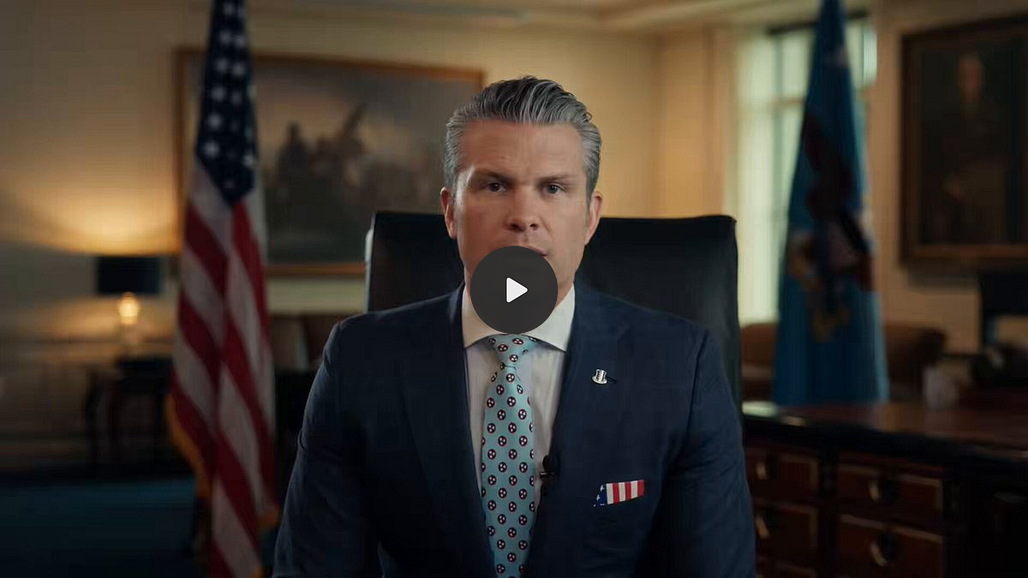
Hegseth announced he was taking a “sledgehammer” to the Pentagon’s use of the 8(a) program, and the metaphor is doing real work. The 8(a) Business Development Program—a 48-year-old SBA mechanism built to steer federal contracts toward firms classified as socially and economically disadvantaged—has long occupied an awkward moral niche in Washington: too institutionalized to dismantle, too visibly gamed to defend without qualification. In practice, it became less a ladder than a routing mechanism, a way to move money while preserving the appearance of corrective justice.
In big aerospace, every major proposal came with a small-business volume and a small-business specialist whose job was not to ask whether the structure made sense, but whether it complied. Percentages were allocated, boxes were checked, ownership categories were satisfied—either at the contract level or smoothed out across the corporation.
In too many cases, the small businesses in question are essentially Potemkin contractors: pass-throughs that collect fees while the substantive work is performed by larger incumbents. Many of these firms just exist as toll booths: collecting money that they then dole out in subcontracts to larger incumbents or other firms, but not before collecting their 7-15% fee for collecting the checks and doing the accounting.
I’m seen numerous examples of 8(a) set aside abuse: passthrough contractors with no value add other than providing a contract number and satisfying a small business requirement. The one example of this I’ve seen time and time again is old white guys who put 51% (or more) of the company in their wives’ name to qualify as a woman-owned or woman and minority-owned business and get the contracts directed to them. My own post recounting one experience with it is presently at 1.9 million views and counting on X:


Hegseth’s move does not repeal the law; the statutes remain, the machinery hums on. What it does do is withdraw the Pentagon’s indulgence, forcing large sole-source awards back under scrutiny and making 8(a) a DEI relic of the past.
SBA Administrator Kelly Loeffler sharpened the knife further, cutting required percentages and targeting the cut-out contractors the program quietly trained into existence.


Contract Number as a Service
I’ve had several cases where some DoW customer wanted to buy a particular system from us for a fixed price but was unable to easily because we don’t have a contract number. It’s hard to get a contract number because issuing one is a legal commitment that concentrates authority, money, and personal risk in a single signature, and the system is designed to make delay safer than error. After decades of layered compliance, audits, and scandal-avoidance, contracting has become a ritual of risk deferral where no one owns the whole chain, but everyone can stop it.
So one popular solution is to have a number of “primes” who provide no other service other than to administer a contract number that can be doled out—for a modest fee of something like 6-18% of the topline. The best part is, many of these contracts are also small disadvantaged businesses themselves, so DoW gets credit against their 8(a) requirements to boot. Two birds, one stone!
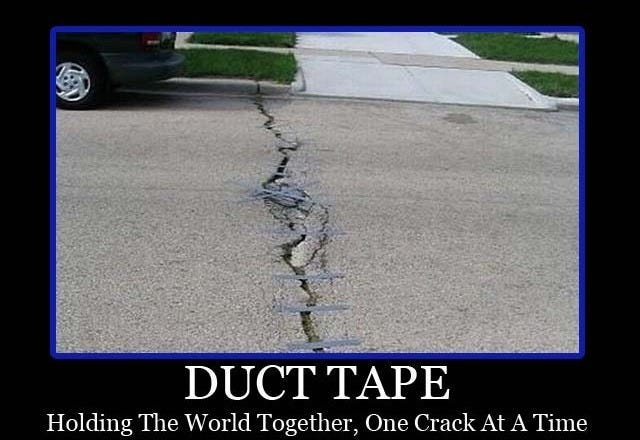
These sorts of services are a textbook example of what anthropologist David Graeber in his Best Seller Bullshit Jobs refers to as “duct-tapers”: folks who patch over structural failures that should be fixed at the root, such as staff compensating manually for broken software or incoherent processes.
There is room for optimism that the DoW may have found ways around this, however: the Golden Dome program was recently kicked off with a massive Indefinite Quantity/Indefinite Delivery (IDIQ) contract with over 1,000 no-dollar awards. Going forward, the strategy appears to be that individual contractors will simply bid on task orders within this vehicle, cutting out the need for the contract number gatekeepers. This bypasses the need for any of this other stuff.
OTA Consortia Managers: A Different Flavor of Contract Number as a Service
The most popular contract in the new defense era is the “other transaction authority” (OTA), which enables quick bidding and awards while short circuiting the rigorous requirements for “programs of record” that can take years to step through.
Because heaven forbid government contract officers just manage this process itself, the “OTA consortia manager”—basically a non-profit that the bidders have to join and pay fees to—was invented to manage this. The OTA consortia manager oversees the “sources sought” stage which qualifies bidders in the “request for information” phase of major programs. In plain English, we take a layer of bureaucracy out of the DoW and put it in a new entity that shouldn’t exist. Now you have a private sector contractor in a “non-profit” raking in the dough to solve the government’s problem.
The consortia manager doesn’t define requirements, evaluate technical merit, or carry mission risk. It simply talks to the contractors so the government doesn’t have to. That alone places the role squarely in Graeber’s territory for box-ticking and legitimacy theater. Motion without authority, structure without responsibility: a bullshit job not by accident, but by design.
While the job is indeed bullshit, the fees aren’t: OTAs are averaging $10 billion a year in awards lately across the 28 or so consortia. If you assume 50% of awards flow through a consortia with a 1-3% management fee for awards plus management fees, you’re talking hundreds of millions in management fees for these entities every single year.
Service Disabled Owned Veteran Small Business (SDOVSB)
Since we are already slaughtering sacred cows, we might as well go after another one: SDOVSB businesses. While we owe veterans who were injured in the service of our country a debt of gratitude, it’s less clear if using the acquisition rules to pay that debt doesn’t create perverse incentives.
Set-asides and sole-source authorities reward status at the moment of award, not competence over the life of the contract, creating firms whose primary asset is eligibility itself. The service-disabled designation applies at a 0% disability threshold, broadening the category beyond any meaningful proxy for need or limitation. My great uncle Bob Mintz z’’l would show me from time to time the barely crimped range of motion of his right pinky, an injury he earned when he slipped on a ship deck carrying a vacuum tube in the early 50s. That injury gave him “a 0% disability, as declared by a military doctor for which I receive $220 a month, to this day.” A shame he never thought to start an SDOVSB.
The predictable result of this designation is a landscape littered with pass-throughs and cut-outs: nominal ownership satisfying the statute while real work and real risk migrate elsewhere.
Small Business Innovation Research (SBIR) Mills
No discussion of small business abuses is complete without discussing SBIR mills: the bane of Senator Joni Ernst’s existence and a problem that’s currently holding up the SBIR reauthorization act, leaving billions in contracts to legitimate small businesses in limbo.
SBIRs are small contracts from DoW or other agencies with money allocated from the SBA. They are structured in phases, with short, low-dollar Phase I efforts (up to $295k) designed to prove feasibility and larger Phase II awards (up to $1.97M) meant to mature the concept. These contracts provide on-ramps into bigger-money contracts like STRATFI/TACFI for larger prototype and production contracts. Think of SBIRs as non-dilutive pre-seed and seed checks for startups that the government writes to get promising new tech off the ground.
The top 20 “SBIR mills” have consumed $3.4 billion in Phase I and II contracts while often producing little more than elaborate research reports.
The reality in recent years has been that a small number of contractors have gamed the SBIR proposal process and played a numbers game to capture an excess share of the grants purely for their own profit. This would be fine if they were actually producing viable technologies with that money, but the transition rate is quite poor (17% on average just to Phase II and less than 1% of revenue in some cases coming from later stage Phase III, TACFI, or STRATFI contracts).
According to Ben Van Roo, the top 20 SBIR mills have captured $7.4 billion in defense funding. SBIR mills like Physical Sciences, Physical Optics Corporation (bought by Mercury Systems in 2020), Charles River Analytics and Triton Systems have each accumulated hundreds of awards totaling over $200 million each. These SBIR mills also have an abysmal rate of transition to other contracts (sometimes as low as 1%).
Having hired engineers from and worked with some of these companies before, I’ve seen how they’ve got the grant writing process completely dialed in (and now with the advent of generative AI probably even more so). One engineer who worked as a “chief scientist” at one told me that their operation was so dialed in that they could generate a 20-30% award rate on $150,000 Phase I grants on less than $5,000 in production costs. The “real money” of course is in the Phase IIs, which often have a 40-50% win rate and bring in a million dollars or more for slightly higher proposal costs. The problem is that 80% of these contracts fail to convert to even a Phase II award, much less real meaningful products, sucking funds from more worthy products and contracts. Meanwhile these SBIR mills soak up empty calories that never transition to real products that are relevant and useful to the warfighter.
Another thing I learned about was the “shell game” these companies often play so that when the business gets too large the original owners spin out a portion as a divested entity so that they can qualify for new grants and stay below the 500 employee limit. Indeed, when Physical Optics Corporation was sold off to Mercury in 2020 primarily for its processor and data recorder product lines, the owners prepared for the acquisition by spinning out 7 or more smaller SBIR companies like Intellisense that continued with the same SBIR mill business model (and the same original shareholders), but with a different name on the door.
What Can Be Done?
As Shyam’s 18 theses rightfully point out, “Small Business Programs should not be welfare.” Hegseth’s scrutiny of the 8(a) program is an important first step in reining in one particular area of waste and abuse, but other steps need to be taken to ensure money is spent more efficiently and create an incentive structure that improves the speed and effectiveness of procurement for the benefit of the warfighter and taxpayer.
8(a) contractor set asides should be eliminated entirely at some point—perhaps with litigation through the courts on the civil-rights implications of these programs—but before that long process plays out, there are some mitigations that can be done. Audits should be forced to prove that the owner is an actual performer on the contract and not just a cut-out who is married to the real person doing all the work. Primes should be banned from receiving funding on these contracts from their subs to avoid the kickback cycle I mentioned in my X post on the subject. The president could also go a step further and suspend set aside requirements entirely by EO—rendering the whole scheme moot.
Cut-out contractors can be addressed by more rigorous auditing proving that companies are performing a significant portion of the technical or services work themselves rather than outsourcing—perhaps changing the contract statute to require a hard percentage like 30% or more for smaller performers.
“Contract as a service” shops can be rendered superfluous by streamlining the process for contract awards and making more aggressive use of “cattle car” IDIQs with scores of no dollar awardees like they are using for Golden Dome. This would give everyone a charge number the government can apply funds against, eliminating the need for this particular duct-taper bullshit job.
SVOSDB companies should be subject to more rigorous disability requirements (perhaps increasing the disabled criteria to a higher number than 0%) and/or subjecting them to the same cutout contract rules above.
OTA rules have been expanded so much that I question the usefulness of consortia managers at all. Groups like DIU, RCO, JIATF 401, and others seem perfectly capable of running RFIs, sources sought solicitations, and hiring qualified contract officers to award and manage OTA processes without outsourcing this responsible to external “non-profits” that are just taskmasters anyways.
SBIR mills can be limited by both incentivizing SBIR program managers (known at TPOCs) to get higher transition rates through awards and penalties. Limiting the number of awards per entity per year to reasonable number (like 8) and capping lifetime awards at $25 million or less would also limit the efficacy of the “spray and pray” SBIR proposal writing model. You could also limit the number of SBIR grant applications a company is able to submit each quarter.
We also need to seriously question whether, in the era of billion-dollar companies with 10 employees, the 500-employee limit is too high and should be revisited.
Any of these steps would help push the straphangers out of the way of the performers, save the taxpayer billions, and help focus the farm system of the Department of War’s acquisition apparatus on its core mission: to deliver new capabilities to the warfighter as quickly as possible.
.
