


KEVIN MCCARVILLE is a Forward Deployed Software Engineer at Palantir. He also serves as a Captain in the New Jersey National Guard, where he commands Charlie Troop, 102nd Cavalry, and is an Airborne Ranger. The views he expresses in this piece are his own.
My company was conducting reconnaissance fundamentals on a drill weekend in the field. As we reviewed concealed position setup and proper stalking techniques, one of my privates looked up at me with a question that was more profound than he knew: “Sir, what would we do if we’re lying here at night and a drone flies overhead with offensive capabilities? What if it picks up our heat signature?”
I answered him honestly: “In that scenario, you’re probably all going to die.”
His response was inevitable: “Then why are we doing this training?”
There was no easy answer to that question.
The future of warfare is no secret in the Pentagon. The widespread use of relatively inexpensive Iranian Shahed drones in Ukraine and the Middle East is headline news. Meanwhile, China and Russia are adeptly fielding various higher-end, more capable systems. The United States isn’t sitting on its hands. We have several counter-UAS systems from both the traditional prime contractors and new entrants. The capabilities are a mix of kinetic interceptors and directed energy weapons.
The problem is, Private Snuffy on the ground doesn’t even know these technologies exist, let alone how to use them or how they will be used to augment battlefield tactics.
The leadership at the top of our military understands that much of the doctrine we still teach at the bottom is obsolete. Yet battalion-level and below units continue running decades-old drills and consulting outdated field manuals, which lead to dissonant experiences like the one above. Doctrine takes far too long to travel from those who write it to the soldiers on the ground who must live and die by it. That lag will cost us dearly in dollars and in lives if we don’t reform and accelerate the way we train.
The Pentagon itself has acknowledged as much. Joint Interagency Task Force 401, the counter-drone task force established in 2025 to consolidate requirements, acquisition, and training under a single authority, opens its new handbook, Small Drones, Big Problems, with a telling admission: the hardest part of countering drones is not the technology, but having trained people and the right policies and processes in place. That message—and that training—has yet to reach the soldier at the bottom.
What We Are Facing
For much of 2024, I was deployed to the Kurdish territories spanning Syria and Iraq. There, the most consistent and lethal threat to my brigade came not from direct ground engagements but from drones. Iranian-backed separatist groups relied heavily on relatively primitive attack drones known as one-way unmanned aerial systems (OWUAS). We just called them “one ways”.
The primary variant at the time was the Iranian HESA Shahed-136. These delta-winged kamikaze drones are approximately 3.5 meters long with a 2.5-meter wingspan and weigh around 200 kg. Powered by a piston engine, they achieve speeds of about 185 km/h and can carry a 40–50 kg warhead. For reference, that is slow—newer jet-powered variants reach 500–600 km/h—and it makes them far easier to engage than other forms of indirect fire. The 40–50 kg payload is likewise middling: huge next to a 3 kg quadcopter, but a poor tradeoff for how clunky they maneuver.
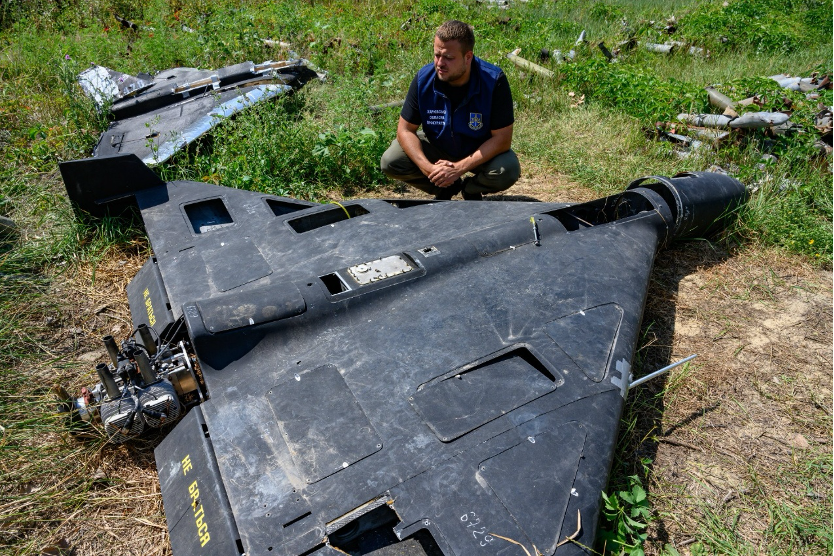
Their range exceeds 2,000 km, making them ideal for standoff attacks with low radar signatures. They are preprogrammed with a grid and flight path, so there is no communication with the operator after they are launched—hence the term, “one way.” The downside to this technology is the drone will just fly into the side of a hill halfway to its destination if that’s what’s on the flight path. The upside is it’s cheap.
While the Shahed represents the lower end of the threat spectrum, Russia and China are fielding systems of an entirely different order. Russia’s Lancet-3 loitering munition has proven devastatingly effective in Ukraine, using optical and laser guidance to strike armored vehicles with a precision that earlier drone generations could not achieve. Then there’s the Orlan-10, which has been widely used for reconnaissance and artillery spotting, making it extremely difficult and often foolhardy to move forces undetected.
China’s threat is more concerning at the strategic level. The CH-4 and Wing Loong II are near-peers to American MQ-9 Reapers in capability. The larger, twin-engine Tengden TB-001 can carry up to 12 precision munitions with an endurance exceeding 35 hours—a heavier-lift class above the single-engine CH-4 and Wing Loong. More troubling is China’s investment in drone swarm technology, where hundreds of low-cost autonomous systems coordinate to overwhelm air defenses through sheer saturation. These are not primitive one-ways. They are precision instruments designed to defeat the exact layered defense systems we are currently building.
Current Capabilities
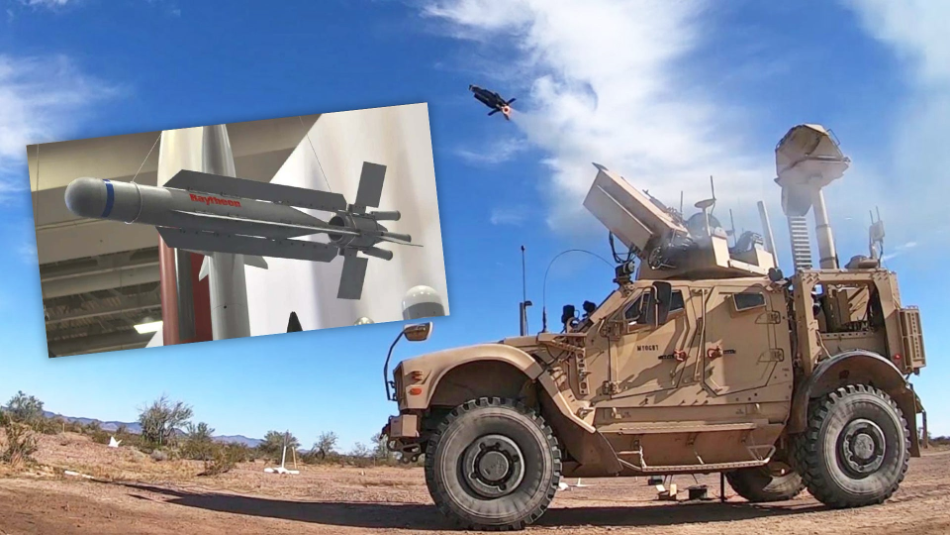
The systems we field today are competent but not comforting: good enough to defeat most of yesterday’s threats, but at costs and reaction times that will not survive tomorrow’s. Our primary counter-UAS systems overseas were the AN/TWQ-1 Avenger and Raytheon Coyote effectors. The Avenger is a mobile short-range air defense platform mounted on a Humvee chassis, giving it the mobility to reposition rapidly across a forward operating base. In practice, we rarely did this, as the lead time on drone detection to impact didn’t give us enough time to reposition effectively.
The Avenger integrates eight Stinger missiles enhanced with proximity fuzes specifically optimized for small UAVs, a .50 caliber M3P machine gun for close-in engagements (a lot less effective in the heat of the moment than one would expect, as accuracy is surprisingly poor and the .50 cal runs through a ton of ammo), Forward-Looking Infrared (FLIR) sensors, and a laser rangefinder. Its day-night capability and rapid engagement speed made it our first line of defense against incoming one-ways.
The Raytheon Coyote, part of the Army’s Low, Slow, Small Unmanned Aircraft Integrated Defeat System (LIDS), functions as a tube-launched expendable interceptor, essentially a drone built to kill drones. Block 2 variants use kinetic fragmentation warheads and engage threats at ranges of 10 to 15 km, typically paired with the KuRFS (Ku-band Radio Frequency System) radar for precision cueing. What made the Coyote particularly valuable was its ability to operate in a networked swarm, where multiple Coyotes can be directed at a single threat or dispersed against multiple targets simultaneously. For our purposes, multiple was never more than two. These systems proved effective in most engagements, but their expendable nature meant each engagement consumed a finite and costly asset. Further, reload and rearm times created windows of vulnerability that a determined adversary could exploit with mass attacks.
The most harrowing incident on our deployment occurred when a Shahed evaded interception and detonated just 45 meters from my bunker. The blast ignited key infrastructure, forcing a medical evacuation of several soldiers to a better-equipped base. Thankfully, all recovered and returned to duty, and every member of our unit made it home. But the event underscored a chilling reality: our defenses, while often successful, were far from infallible.
Evolving Countermeasures
Today, the U.S. military is investing in layered, multi-domain solutions to counter the growing drone threat. Kinetic interceptors remain the backbone of current counter-UAS efforts. The Coyote fleet is being expanded to thousands of units, and newer systems like AeroVironment’s Freedom Eagle-1 are being fielded to address longer-range threats that existing platforms cannot reliably engage. The Army is also exploring multi-missile salvos to handle saturation attacks, recognizing that a single interceptor per drone is not a sustainable model against swarm tactics.
Directed energy weapons represent the most promising long-term solution to the cost asymmetry problem. A Shahed-136 costs roughly $20,000 to produce; a Stinger missile costs over $38,000. High-power microwave systems and solid-state lasers can engage targets for a fraction of that cost per shot and do not require reloading in the traditional sense. The Army’s High Energy Laser Mobile Demonstrator (HEL MD) and related directed energy programs are advancing rapidly, though ruggedizing these systems for forward operating environments remains a significant engineering challenge and their effectiveness is often higher in theory than in practice.
Electronic warfare and AI-driven detection are becoming central to the counter-UAS kill chain. Rather than waiting to intercept a drone kinetically, new systems aim to detect, classify, and jam or spoof incoming threats before they reach their targets. AI is being integrated to reduce the sensor-to-shooter timeline, which in current systems can be dangerously long against fast-moving or maneuvering threats. Our enemies are quickly picking up on these tactics, though, and drone behavior in newer models is built to counteract these measures. For instance, some drones can convert from a one-way to a preplanned grid or just return home if its connection to its operator is severed by electronic warfare.
Non-kinetic defeat options, such as the Coyote Block 3, offer the ability to disable drones electromagnetically without physical destruction, preserving the ability to collect and exploit the wreckage for intelligence purposes. This is particularly valuable when dealing with adversaries who rapidly modify their systems in response to our countermeasures.
Another interesting new countermeasure is Merops, a low-cost fixed-wing interceptor refined through hard combat use in Ukraine before being adapted for our own fight (Merops is built by Perennial Autonomy, a company backed by former Google CEO Eric Schmidt). According to the Secretary of the Army, the service purchased roughly 13,000 Merops interceptors within about eight days of the opening of Operation Epic Fury, fielding them in the CENTCOM theater within two weeks of the first Iranian counter-strikes. At around $15,000 per drone against Shaheds costing two to three times that, solutions like Merops may finally have flipped the cost equation in the defender’s favor.
Solutions such as these indicate that, at the highest levels, at least, our military is absorbing hard-won lessons from Ukraine, where drones have transformed the battlefield into a transparent killing zone.
Lessons Learned
At the strategic level, I hold measured confidence that senior Army leadership recognizes the urgency of drone warfare. First-person view drones, loitering munitions, and fiber-optic guided systems have inflicted massive casualties, forced adaptations in concealment, movement, and combined arms tactics, and created a relentless cycle of innovation and counter-innovation. Electronic warfare (i.e. drone jamming) alone is insufficient; success demands integrated systems of sensors, effectors, deception, and rapid doctrinal evolution. Ukraine demonstrates that quantity, adaptability, and decentralized decision-making often matter as much as technological sophistication.
The Army is very much still figuring out how it fits into this dangerous new world. Tactics are being improvised across Ukraine and the Middle East in real time, and how our own technology will incorporate lessons learned remains undecided. We’ve made small adjustments—more dispersion on surveilled patrols, extra EW gear on reconnaissance—and we’re slowly realizing that the situations calling for Cavalry Scouts and recon platoons are dwindling. But we still refuse to say the hard part out loud: the doctrine we teach isn’t just obsolete. It’s actively getting in the way of winning the fight.
Recruitment priorities must evolve accordingly. We need greater emphasis on drone operator military occupational specialties (MOS), rather than traditional combat arms personnel. More critically, the enlisted ranks should aggressively target individuals with technical aptitudes: coders, engineers, tinkerers, and systems builders who can rapidly prototype, maintain, and innovate the tools our warfighters require. Most of the more technical MOSs and positions in the Army are obtained through credentials after enlisting and not at the point of entry. I think it’s time for a change so that we start the pipeline of tech-savvy junior enlisted soldiers at the top of the funnel. Anybody, inside or outside the military, looking at any of the conflicts recently, can plainly see that our next battles will be fought much more with keyboards than bayonets.
Boots on the Ground
Standing over that young private on the range, I cannot escape the truth in his question. In its current form, much of what we train feels not merely pointless, but actively detrimental. We instill false confidence in methods ill-suited to current conflicts we face. Our soldiers deserve better. They deserve a force-wide cultural shift, driven from the top but embraced at every level, that places technological fluency, rapid adaptation, and drone-integrated tactics at the center of our profession.
Wars will increasingly be won through superior technological investment, iterative learning, and the empowerment of technically skilled personnel. I read a while back that Navy and Air Force recruitment was having an interesting dilemma. They had no shortage of pilot applicants, they just knew they didn’t need them anymore. From fighter jets, to stealth bombers, to refuelers, the military across every branch is moving away from manned aircraft. I understand it’s not as sexy being the guy in Oklahoma with a controller and a screen as it is being Tom Cruise in Top Gun, but drones can be faster, more agile, and carry heavier payloads—all without risking human life. That’s where the military is heading.
Physical Training scores and marksmanship will still be hallmarks of a good soldier, but the tech-savvy 19-year-old will probably be contributing more to our military might in the long run than the PT stud. It is imperative we embrace that reality from the Pentagon all the way down to the private fresh out of basic. Or like many who have failed before us, we’ll keep fighting the last war.
